
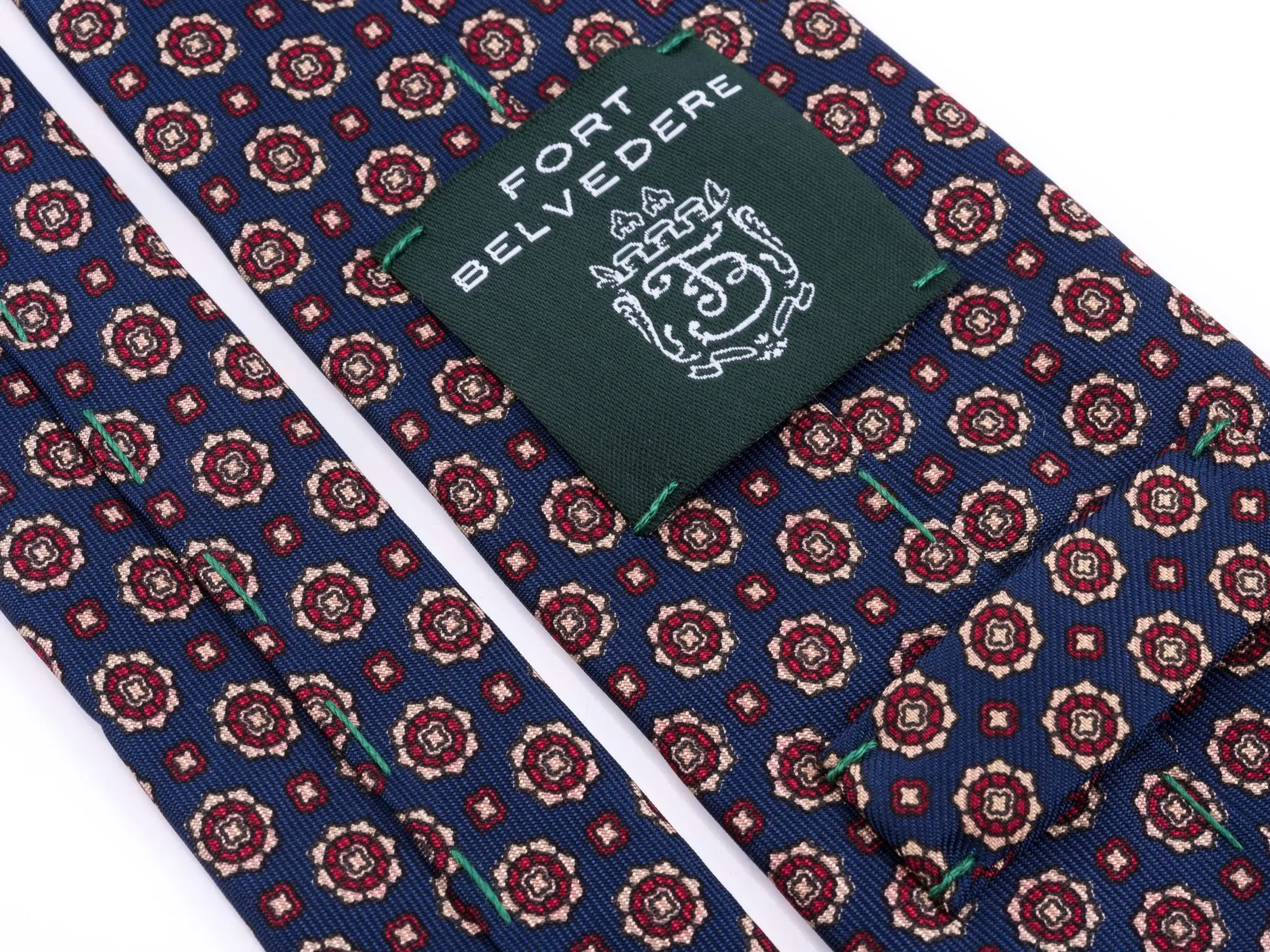
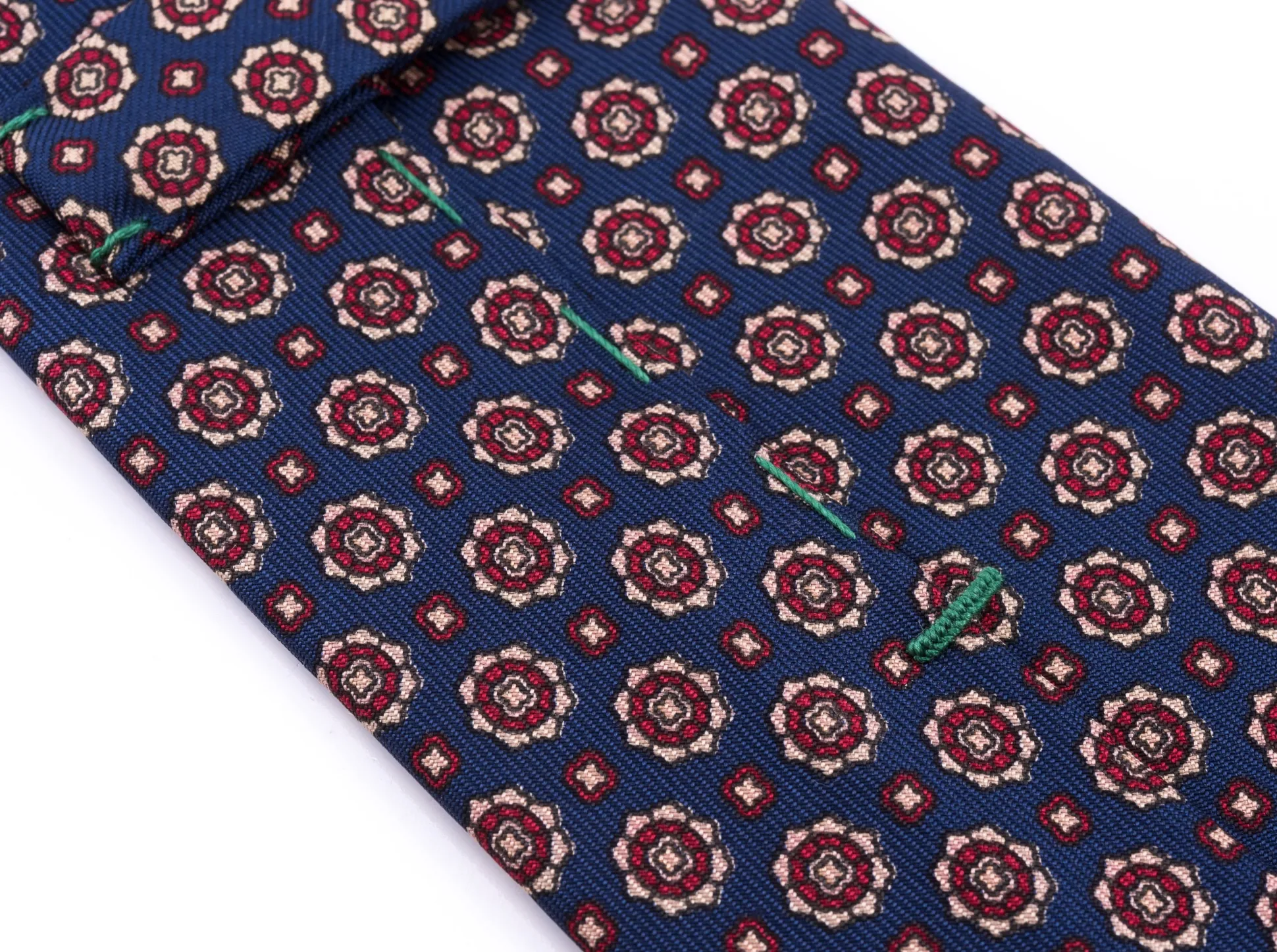
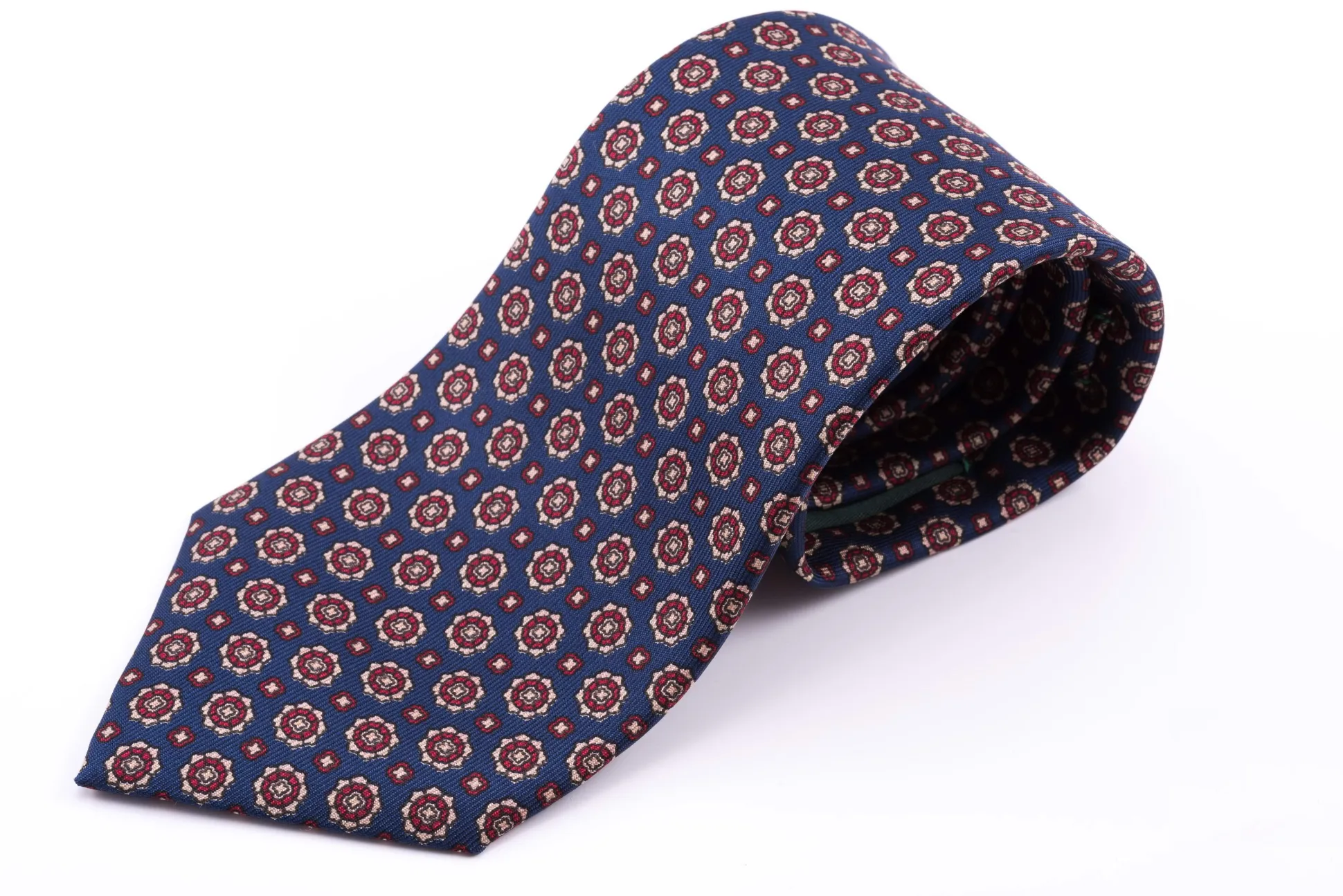
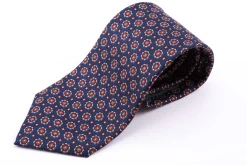
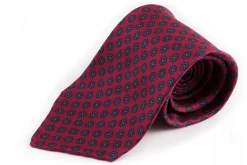
Blue & Red Printed Madder Silk Tie
Original price was: 165,00 $.107,89 $Current price is: 107,89 $.
Solve the Equation for Style
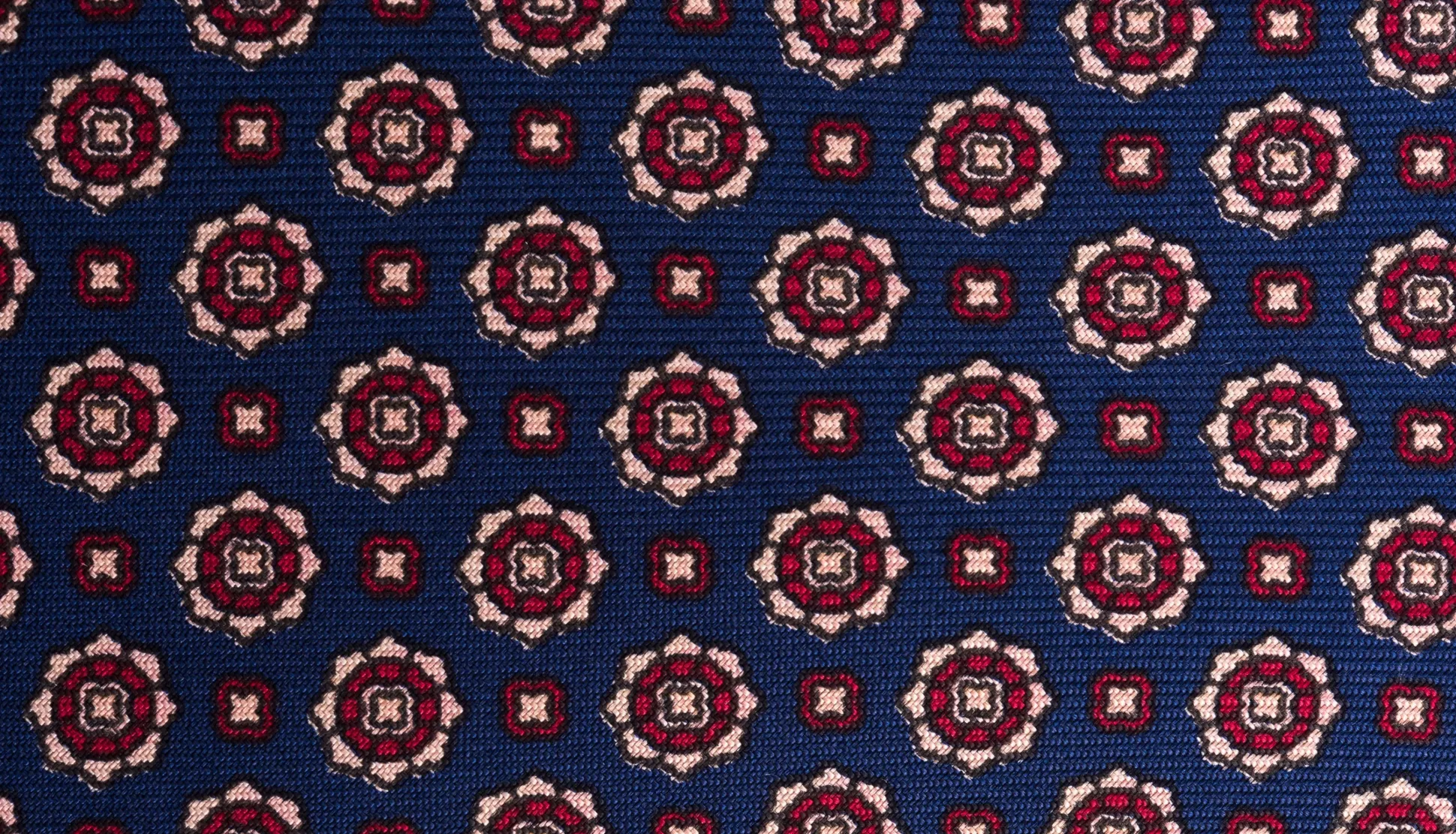
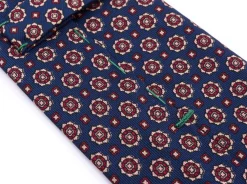
Geometric patterns provide countless opportunities for styling potential, suitable to a range of occasions and formalities. The color scheme of this tie has been carefully selected to maximize the options you have for how best to wear it.
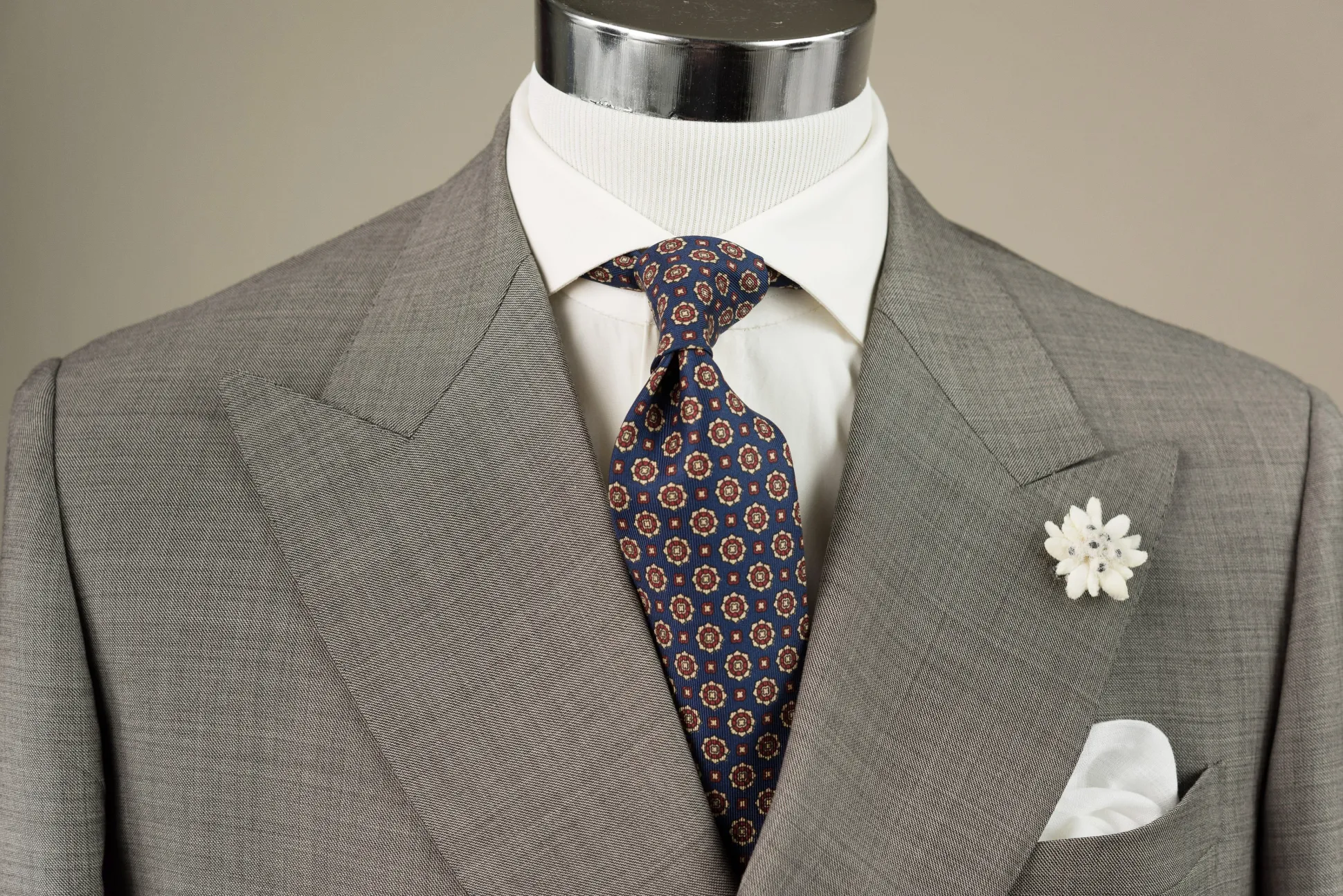
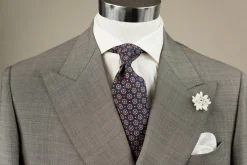
When selecting a shirt, you cannot go wrong with a white or light blue shirt; for something more bold, consider solid shirts in pastel colors or shirts with stripes. Avoid shirts with busy patterns that could clash with the tie’s geometric detailing.
Pair your tie with a navy, grey, medium or light brown, or charcoal jacket or suit for a classic look. For a more casual style, choose a blazer in a harmonious neutral color such as beige or brown.
If you’re wearing a pocket square, make sure it complements the tie without matching it exactly. A pocket square with hints of red or blue can subtly echo the tie’s colors, while complementary colors like muted orange, green, or purple would also be great options.
Questions?
Fine men’s clothing and accessories have been our passion for over 20 years. If you have any questions or need assistance with accessories, please contact us!
Short 4054956001068 | Regular Untipped 4054956001075 | Regular Self-Tipped 4054956001082 | Long 4054956001099
Decadent Madder Silk Ties
- Dynamic Classic Style Geometric Pattern
- Crafted from Genuine Ancient Madder
- Unique Chalky Feel
- Made Entirely by Hand
- 3-Fold Construction
- Signature 3-Ply Silk Yarn
- Available in Three Sized by Height
Why We’re Mad for Madder
Madder ties have been gracing the necks of menswear connoisseurs for centuries, and it isn’t difficult to make a great impression when your neckwear radiates pure class and elegance with the rich yet subtle colors typical of madder dyes.
Popularized during the 19th century, madder silk is famed for its plush, decadent colors and unique, tactile hand. Genuine madder silk, however, is increasingly difficult to find nowadays, but Fort Belvedere was able to secure a supply from a heritage silk mill operating in England.
Originally, madder was sourced from alizarin dyes made by grinding up the roots of the Rubua Rubiaceae plant. Then, following innovations made in the 1860s, this dye could be reproduced chemically. Today, all madder colors are produced chemically, but the name remains the same.
An Ancient Dye of Historic Beauty
Madder silk is a mesmerizing and lustrous textile that has been held in high regard throughout the annals of time for its intensely rich hues. The name “madder” is derived from the Rubia tinctorum plant, also known as common madder or dyer’s madder, which is the source of its natural and vibrant dyes.
Traditionally, natural madder root was renowned for yielding primarily red pigments; however, the evolution of modern dyeing techniques has expanded this spectrum to embrace a panopony of deep, saturated tones. Envision shades such as mustard yellow, forest green, burnt orange, profound blues and violets—and naturally, the classic reds and burgundies.
The very finest madder products, such as those we offer, are renowned for their unique texture and sheen, having been printed on twill silk fabric treated with gum arabic, conferring on them a distinct, matte finish known among connoisseurs as a “chalk hand.”
Today, the artisans dedicated to crafting madder fabric might be fewer than in days past, yet select purveyors continue to uphold this sartorial tradition. The creation of madder silk is an intricate and labor-intensive art, entailing numerous stages of screen printing and necessitating only the finest quality silk. With a commitment to excellence, Fort Belvedere sources its revered ancient madder exclusively from England.
Sized To Fit You
Almost all retailers sell their ties as one-size-fits-all. A handful offer neckties that are either longer or shorter. At Fort Belvedere, we cater to the needs of every man, whether of modest, average, or above-average height, which is why we are proud to offer neckties in three distinct sizes.
The dimensions of our neckties are proportional to your height.
SHORT: For those who are 5’8” or 173 cm or shorter.
REGULAR: For those between 5’9″ or 175 cm and 6’2″ or 188 cm.
LONG: For those who are 6’3” or 190 cm or taller.
If you prefer to wear trousers with a higher rise and are in-between sizes, it may be better to size down so that the necktie does not fall below your waistband when tied.
Available Self-Tipped or Untipped
Based on size, some of our ties are Self-Tipped or Untipped.
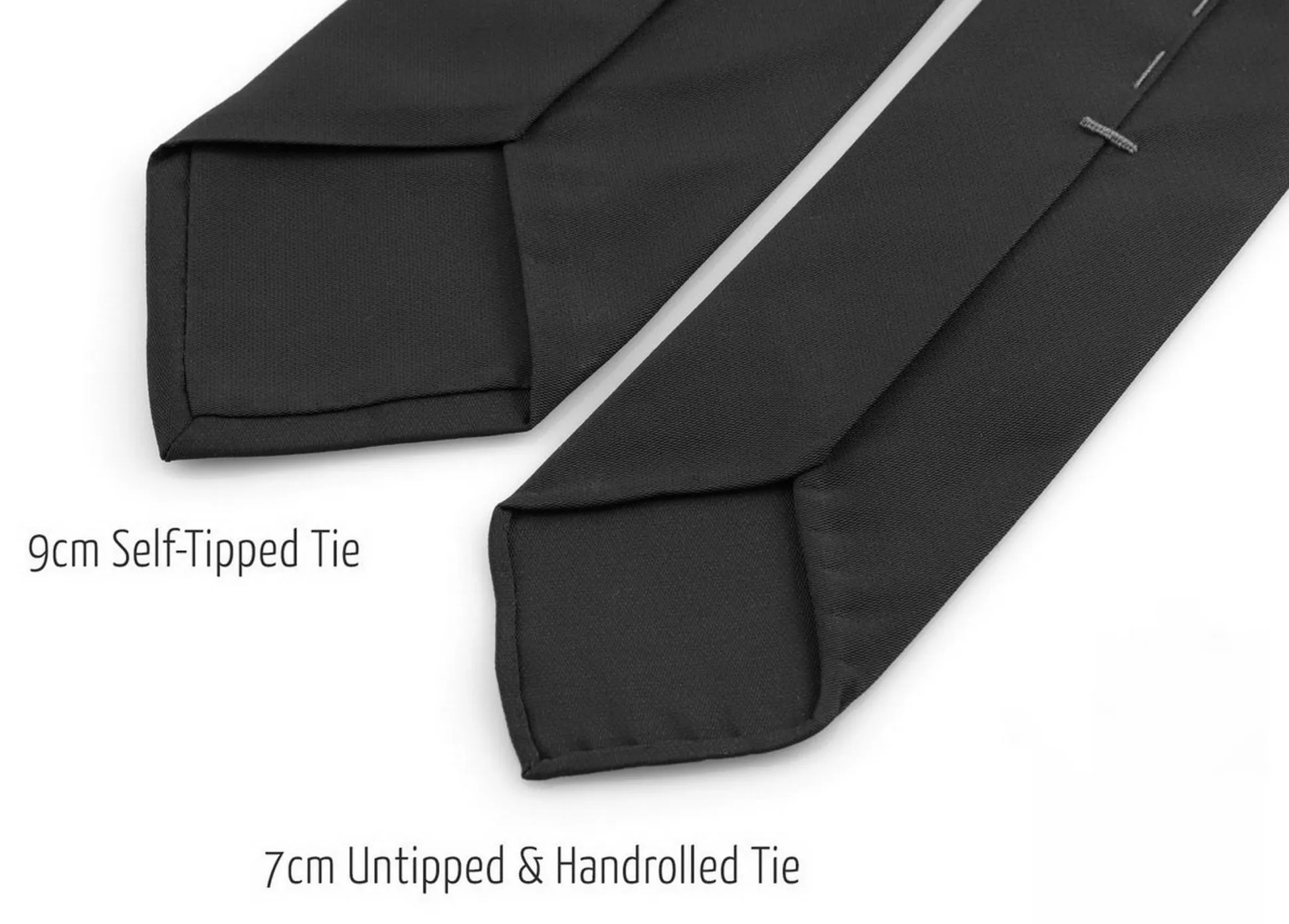
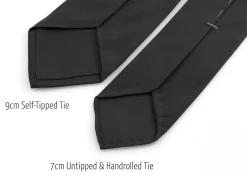
Self-tipped ties have a lining as part of their tips. The overwhelming majority of tie makers use a less expensive fabric for the tip in a bid to save money, but doing so compromises on the look and the functionality of the tie. All self-tipped Fort Belvedere ties feature a generous piece of lining in the same fabric as the tie’s body for a consistent, quality-made look and feel that is in keeping with traditional self-tipped tie construction.
Fort Belvedere also offers untipped ties in which the tips are carefully hand-rolled for a beautiful look and secure finish that requires more skill to achieve than a self-tipped tie. Because they have less fabric, untipped ties are also lighter. Untipped ties were very popular in the 1930s, and as a tribute to the styling conventions of that era, Fort Belvedere untipped ties have a vintage flared end.
Please Note: Because this tie is handmade and is designed to be flexible, its final size can vary. As a general rule, our ties have a length tolerance of 1.5″ – 4 cm.
Cleaning
A silk tie should not be washed as immersion in water as doing so can ruin the texture and color of the silk. Instead, spot clean your tie using the following steps.
Gently blot any excess substance from the stain with a soft, dry cloth. Do not rub as this can damage the fabric.
Fill a small bowl with lukewarm water and add a few drops of mild detergent specifically designed for silk.
Dip a corner of a clean, white cloth into the solution and test it on a hidden area of the tie to ensure it doesn’t cause discoloration.
If the test is successful, lightly dab the stained area with the dampened cloth. Use a gentle tapping motion and do not saturate the silk.
Moisten another clean cloth with plain lukewarm water and gently dab the area to remove any soap residue.
Pat the cleaned area with a dry cloth to absorb moisture, then leave the tie laid flat on a towel to air dry completely.
If the stain does not respond to the these steps, take the tie to a professional dry cleaner experienced in handling silk garments.
Storage
To prevent heavy creasing, never store your neckwear tied or knotted.
Undo the knot and then roll the necktie up in a firm but not excessively tight coil. Allow it to sit in the coil for about a day to relax wrinkles.
To prevent wrinkles, store your silk tie hanging or in a very loose roll.
| Size | Long ≈ 156 x 9 cmcm / 61.5" x 3.5" self tipped, Regular ≈ 149 x 7cm / 58.5" x 2.75" Self-Tipped, Regular ≈ 149 x 7cm / 58.5" x 2.75" untipped, Short ≈ 142 x 7 cm / 56"x 2.75" untipped |
|---|---|
| Color | Blue with Yellow & Red Neats |
Be the first to review “Blue & Red Printed Madder Silk Tie”
Related products
Accessories
Accessories
Accessories
Accessories
Accessories

Accessories
Accessories
Accessories
Accessories
Accessories
Accessories
Accessories

Accessories
Reviews
There are no reviews yet.