
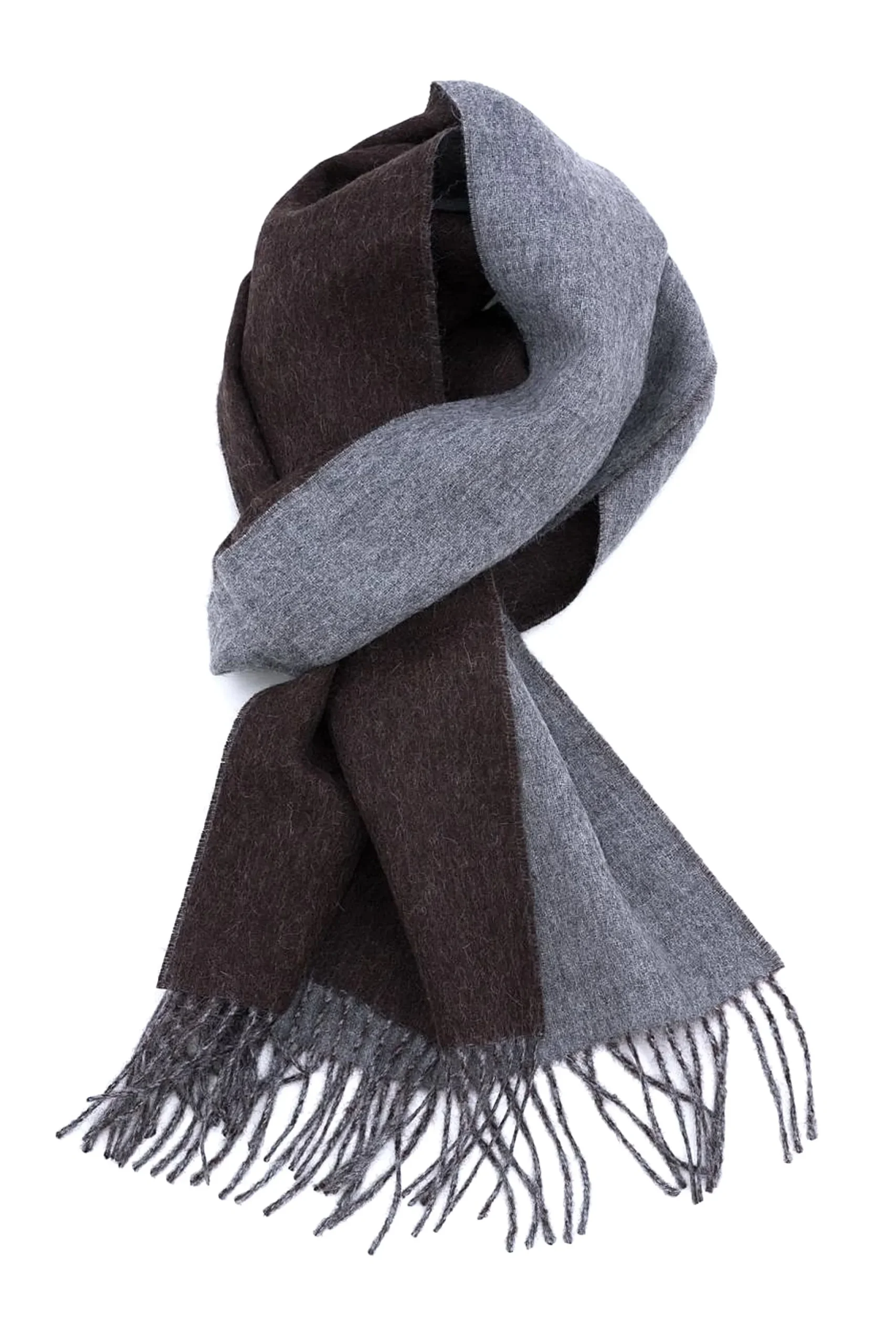
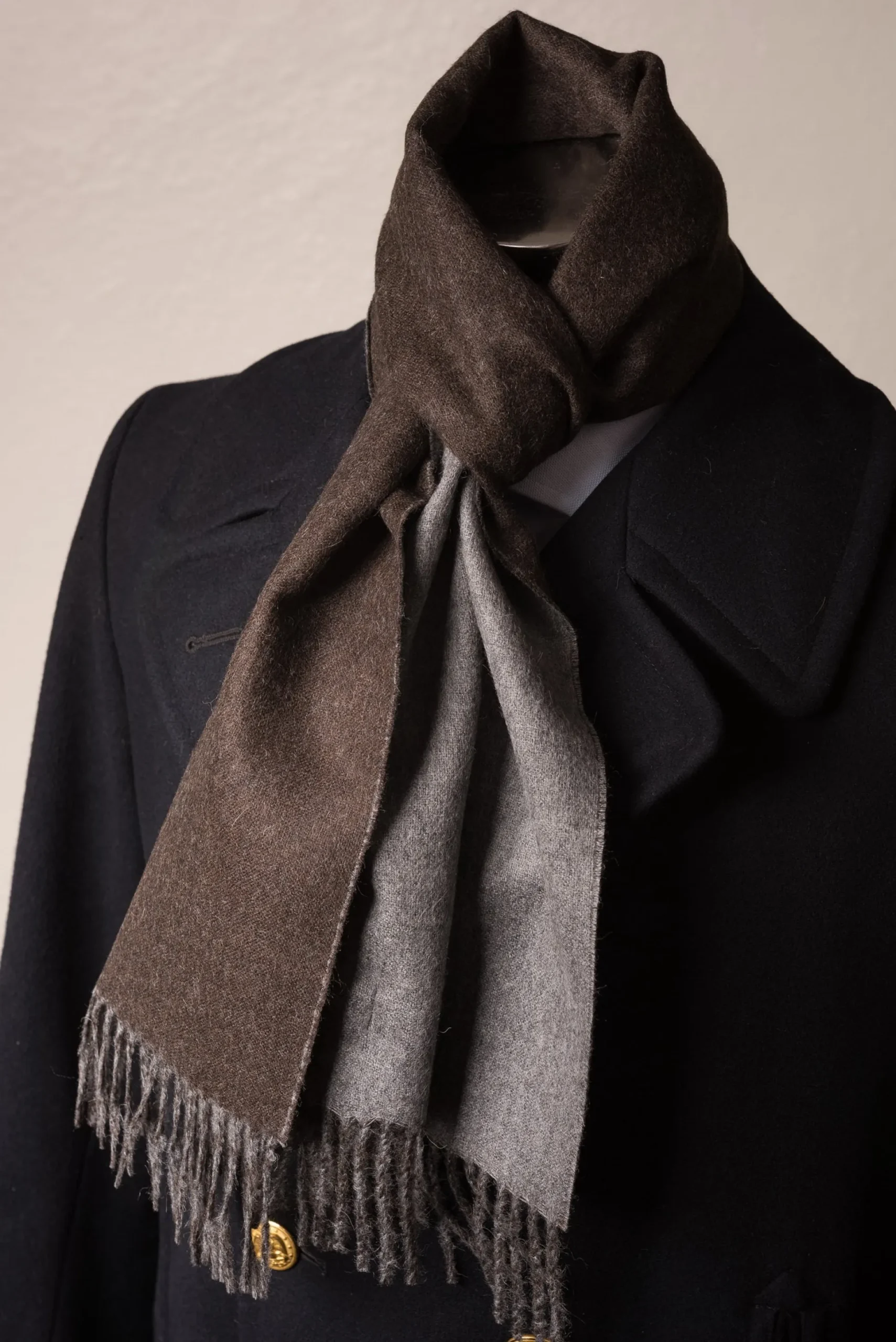
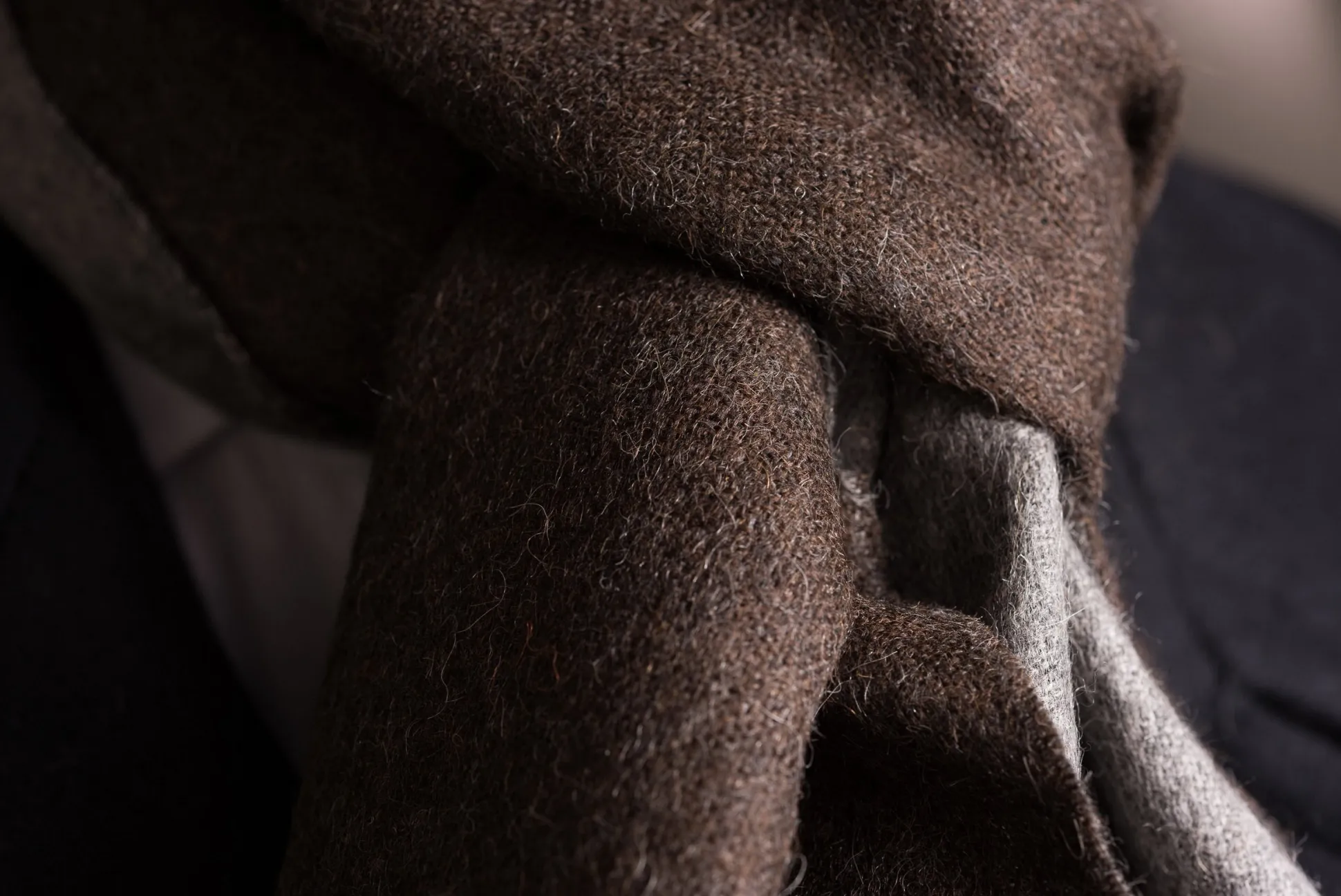
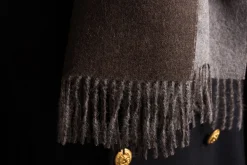
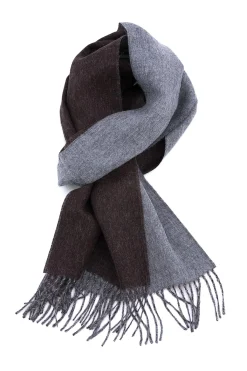
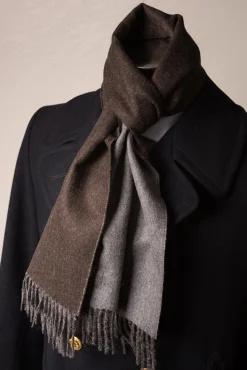
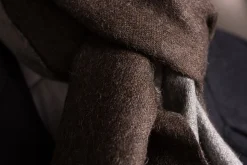
Brown & Gray Double Sided Alpaca Scarf
84,89 $
Unlock Earthtoned Elegance!
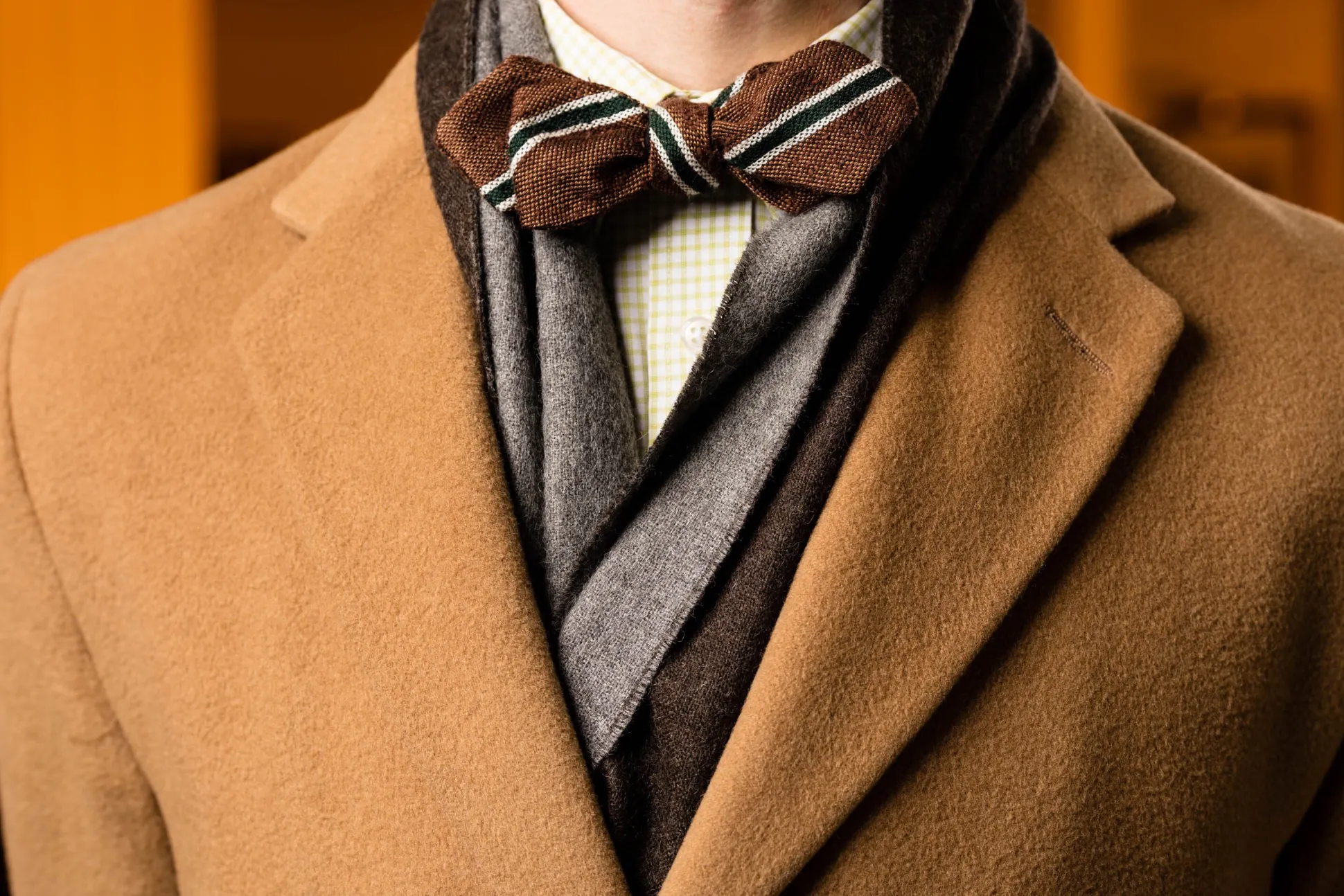
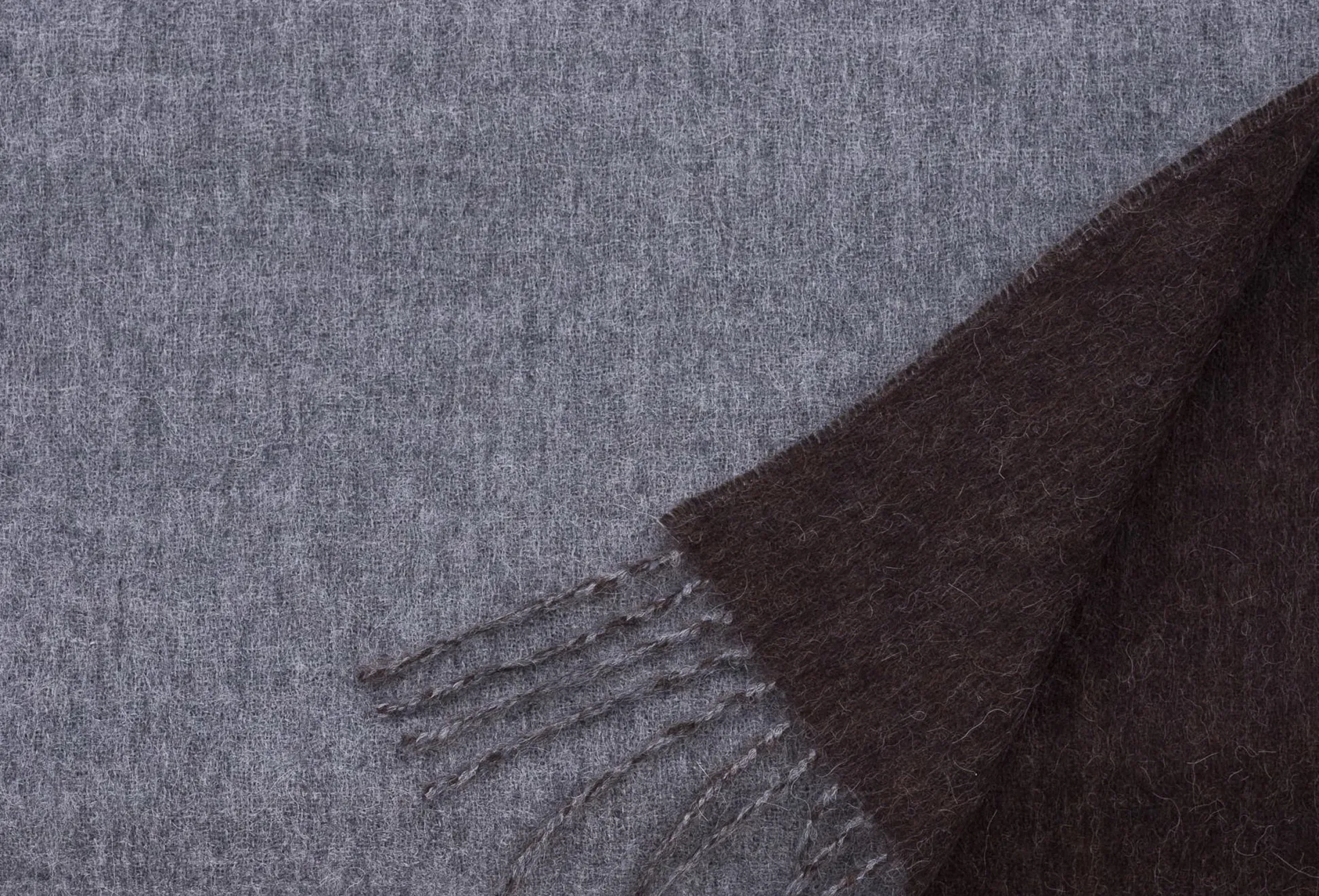
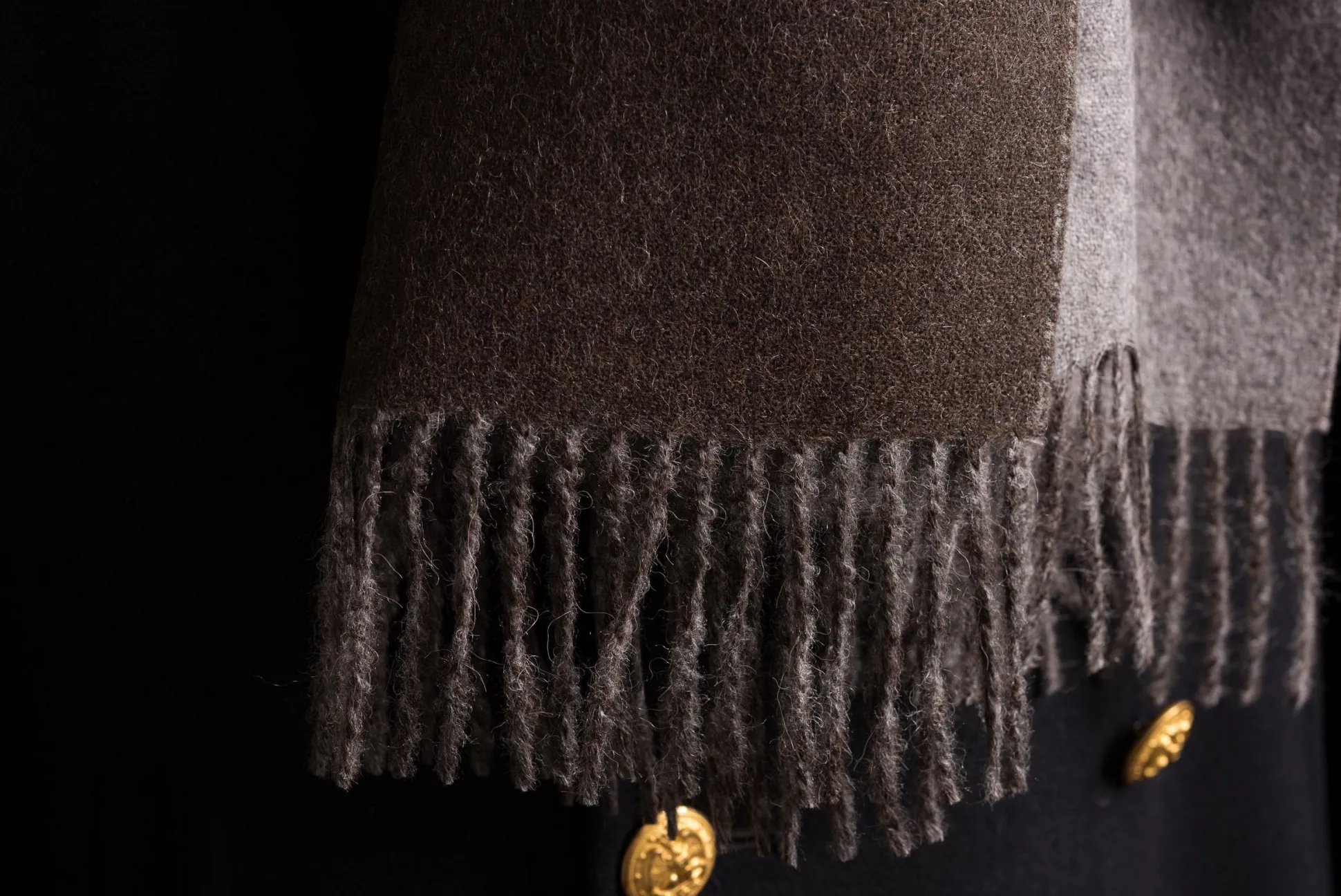
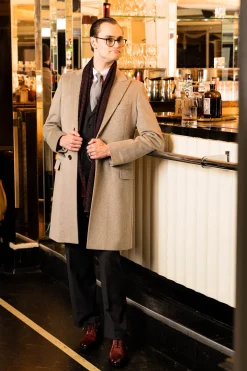
When you have a reversible alpaca scarf with grey on one side and brown on the other, you have a versatile accessory that can pair well with a variety of color combinations.
Pair your scarf with outfits in similar shades to create a sophisticated tonal look. Light greys will provide a subtle contrast, while darker greys will give a more uniform appearance. The brown side of the scarf goes well with earthy tones such as beige, olive green, or rust. These colors echo the natural roots of the alpaca fiber.
Both grey and brown pair beautifully with cream or white. This combination creates a clean and classic look that is perfect for a crisp, winter day.
Blues, from light blues to navy, complement both the grey and brown sides of the scarf. A lighter blue will serve as a neutral backdrop that allows the scarf to stand out, while for a more subdued but equally stylish option, navy blue works well with grey and provides a nice contrast with brown.
Consider pairing your scarf with deep reds like burgundy or maroon for a rich, warm aesthetic that’s particularly appealing in the autumn months.
Remember to consider the occasion, the rest of your outfit, and personal preferences when selecting the right color combinations to match your reversible alpaca scarf.
Questions?
If you have questions or need style advice in choosing a scarf for yourself or someone else, let us know, we are happy to help.
SKU: 4054956002607
Superlative Alpaca Scarves
- 100% Baby Alpaca Fleece
- Made in Peru
- Hypo-Allergenic & Lanolin Free
- Designed to Keep You Warm
- Sufficient Length for Proper Use
- Measures 180 cm x 30 cm / 70″ x 12″
Why The Dimensions Matter
The length and width of a scarf massively impact not only its look but also how well it functions as an insulator. Most men’s scarves on the market today are 150 cm x 30 cm, or 60” x 12.” This sizing was selected only to save money on costly resources, and as such, it is too short to provide sufficient warmth or protection from the elements.
We extensively researched and tested various scarf lengths to find the perfect dimensions. We found that traditional Scottish scarves were 180 cm x 35 cm, or 72” x 14,” and while the length was ideal, the width felt too stuffy and constricting. Therefore, we settled on the perfect format of 180 cm x 30 cm, or 72” x 12” for all of our scarves: these dimensions provided the perfect union of warmth, coverage, convenience, and styling potential.
The King of the Andres
Although blessed with a soft feel and natural insulating abilities, alpaca yarn is sadly underutilized in modern menswear. Found mostly in southern Peru at elevations around 12,000 feet above sea level, alpacas, or lama pacos, are South American camelids that know how to stay warm when it’s cold, thanks to their incredible natural insulating abilities.
Alpaca fibers have internal microscopic air pockets that naturally trap heat, vastly augmenting their ability to insulate and keep warm. Alpaca fibers also have a silky, extremely soft feel, somewhat similar to cashmere, but with considerably more durability. Alpaca fibers are also elastic, making them less prone to over-stretching, and are lanolin-free and hypoallergenic, making them perfect for people with wool or cashmere allergies.
Care
To keep your alpaca scarf clean and looking its best, always hang it up or fold it neatly when not in use.
Washing
Your alpaca scarf will require very minimal regular cleaning. In the event that it begins to appear dirty, you can hand wash your scarf in cold water using a mild detergent, but never use bleach. Gently agitate your scarf in the water but don’t rub or wring it, as you could bruise the fibers. Once finished, rinse the scarf thoroughly.
Drying
Lay the scarf flat on a towel to air dry. Every few hours, replace the towel and flip the scarf to dry both sides evenly.
Do not place your scarf in direct sunlight. Do not use artificial heat, like a hair dryer, to expedite the drying process.
Ironing
In the event of wrinkling, you may carefully iron your scarf at the lowest heat setting. Place a cloth between the iron and the scarf to protect the fibers.
Storage
When not in regular use or when putting away seasonal attire, store your scarf flat, in a loose roll, or gently folded. To keep away dust and moths, we recommend keeping the scarf in a breathable cotton bag.
If you store your scarf in a hanging position, be aware that the effects of gravity may slightly distort the weave.
| Color | Reversible Dark Brown & Medium Gray |
|---|
Be the first to review “Brown & Gray Double Sided Alpaca Scarf”
Related products
Accessories
Accessories
Accessories
Accessories
Accessories
Accessories
Accessories
Accessories
Accessories
Accessories
Accessories
Accessories
Accessories
Accessories
Reviews
There are no reviews yet.